Insights · From the factory · April 2026
Power stations belong in a factory.
On our floor this month: a 250kW machine for a North East paper manufacturer, and the whole argument for building power stations indoors.
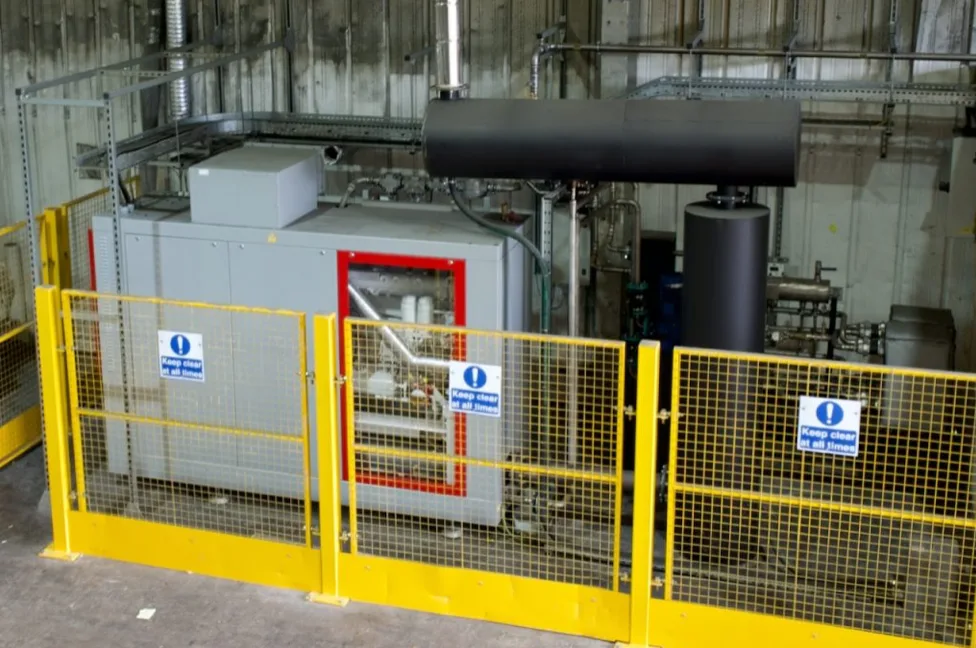
On our floor this month: a 250kW machine for a North East paper manufacturer, and the whole argument for building power stations indoors.
The unit on our floor this month is a 250kW machine built around a 300-horsepower V12, destined for a paper manufacturer in the North East. Its electricity will run the plant's machinery; its 400kW of recovered thermal energy will handle heating, hot water and cooling. Payback: under two years.
It could have been assembled on the client's site. Almost everyone in this industry still works that way: kit delivered in pieces, built up in a yard, commissioned against the weather. But a power station built indoors, on jigs, by the same hands, with full-load testing before dispatch, is faster to deploy, cheaper to install and dramatically easier to quality-control than one improvised outdoors.
The discipline compounds. Because the units are repeatable, a multi-site programme can run on a production schedule rather than a construction schedule. And because testing happens before dispatch, on-site installation is days of work: a pad, connections, commissioning. What arrives on the truck is described on the platform page.
Factory assembly is how a six-month deployment stays a six-month deployment. It's the whole premise of how we work, and you can see the results in deployments.
Dozens of commercial sites, delivered on a production schedule.
PlatformWhat a containerised power station contains, and why it works for twenty years.
Case studyFactory assembly at work: a 2MW array for a site the grid could not supply.