How it works

One fuel in.
Three services out.

A combined heat and power system generates electricity on your site and puts the engine's heat to work instead of throwing it away. This page explains the machine, the physics and the four steps between a first conversation and cheaper power.

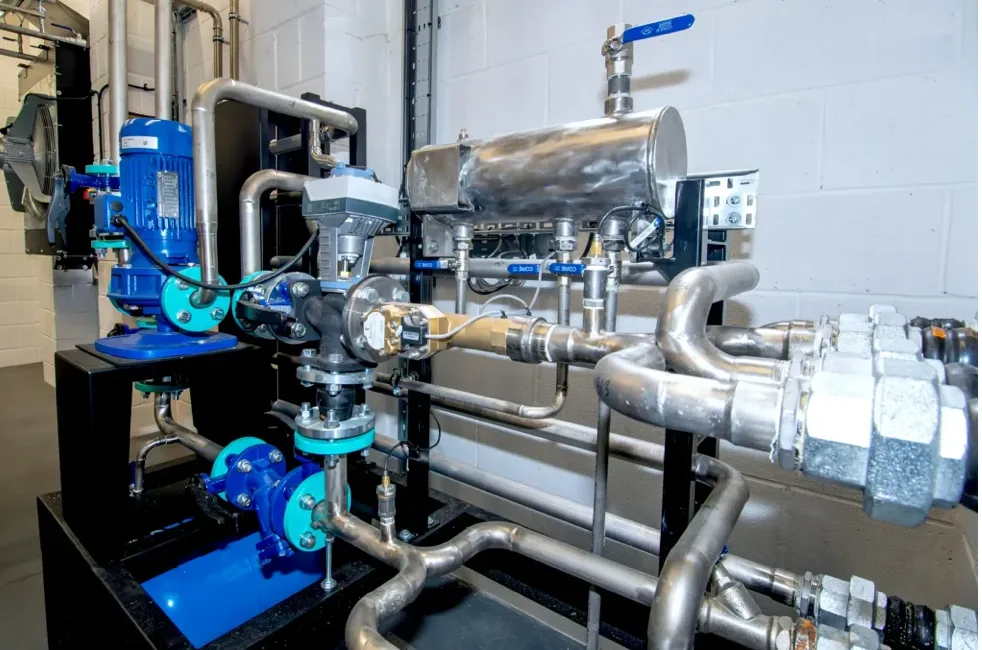
Heat recovery pipework inside a Boulton combined heat and power installation
The machine

Gas drives the engine. The engine drives everything else.

Inside every Boulton containerised unit sits a precision gas engine coupled to a generator. The gas you already buy drives the engine; the generator makes your electricity behind your meter, free of the network charges and levies loaded onto every grid unit, roughly 30% of what you currently pay.

Then we go after the heat the grid throws away. Jacket water and exhaust heat are recovered and piped wherever your site needs warmth: process heat, space heating, hot water. Add an absorption chiller and that same heat becomes chilled water, with no moving refrigeration parts and no extra electrical load: trigeneration, in one enclosure.

40%

Electricity

Of the fuel's energy, delivered at your meter as low-cost on-site power, around 10p per kWh all-in against 22–30p from the grid.

51%

Recovered heat

Captured from the engine and exhaust for heating, hot water, drying, steam pre-heat, or cooling through absorption chillers.

9%

Losses

The unrecoverable remainder. Total fuel efficiency runs above 90%. Conventional grid generation delivers around half, before transmission losses.

This is why on-site generation is cheaper. It isn't a discount. It's physics. The same arithmetic drives the 30–50% carbon reduction a CHP system delivers from day one.
The fuel

Natural gas today. Biomethane when you're ready.

Every engine we build runs on natural gas, biomethane or a hydrogen blend, with no conversion cost. Biomethane is made from what Britain throws away: farm waste, food waste, sewage. Capturing it removes methane from the atmosphere, a gas dozens of times more potent than CO₂.

Where a site has no gas main at all, units run from on-site LNG storage, fully off-grid. The fuel path is covered in detail on our sustainability page.

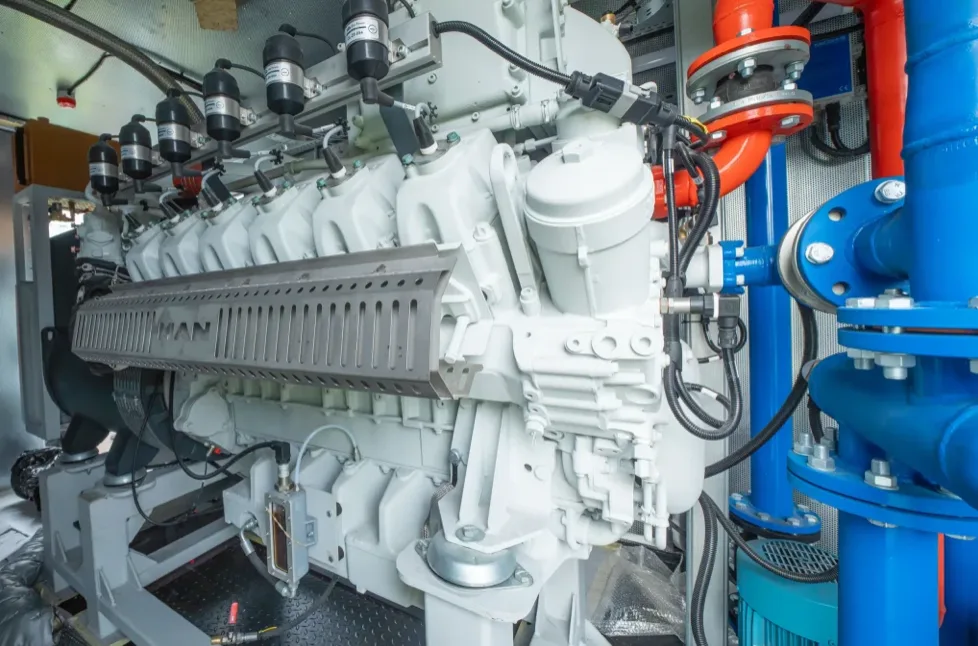
Precision V12 gas engine inside a Boulton CHP enclosure, biomethane-ready
01

Less fuel, same output

By capturing heat that conventional generation vents to the sky, a CHP system needs less fuel for the same energy: the cheapest efficiency gain available to an industrial site.

02

Lower emissions

Less fuel burned means less CO₂ produced: typically 30–50% below equivalent grid supply, from efficiency alone, before any switch to biomethane.

03

No wasted heat

Recovered engine heat replaces separate boilers and, with absorption cooling, electric chillers: one machine doing the work of three.

04

Power where it's used

Generation at the point of consumption means no long-distance transmission, no line losses, and resilience when the network stutters.

The model

Four steps. About six months. No capital.

Under a Boulton power agreement we fund, build, own and maintain the equipment. You buy the electricity it produces, at a price locked below the grid. Here is the whole journey.

01

Survey

We visit your site, meter your load, examine your gas supply and listen to your plans. It costs nothing and commits you to nothing.

02

Proposal

You receive a precise model of your site's economics: system size, generation price, projected savings year by year, carbon impact. Costs broken down, assumptions shown. If the numbers don't clear our own bar, we'll tell you and leave.

03

Build

We manufacture your unit, handle consents and gas works, and install around your operations. Because we are the manufacturer, your project isn't waiting behind someone else's order book.

04

Switch-on

Your site starts generating. From that day you pay only for the power you use, at the agreed rate, always below grid. We monitor, maintain and insure the equipment for the full term.

The agreement, plainly

The fine print, in large type.

Term

Typically 10 to 15 years.

Your price

Locked mechanism agreed up front, always at a discount to grid supply.

Your capital

None. We own the equipment.

Maintenance & insurance

Ours, for the term. Monitored around the clock by the people who built it.

Gas

Typically your supply; we can advise on procurement.

At term end

Renew, buy the equipment, or we remove it and make good.

Prefer to own the asset outright? We sell systems too, with paybacks typically inside 12 to 18 months. See what that looks like on real sites in our deployments.

Get your proposal. Keep the workings.

Start with a survey