Deployments · Textiles · West Yorkshire
A weaver's bills, cut by more than half.
A family firm weaving premium cloth needed continuous power for the looms and constant heat for the process. Energy prices threatened both.
A family firm weaving premium cloth needed continuous power for the looms and constant heat for the process. Energy prices threatened both.
The looms run long hours, the process needs constant heat, and the building needs more. When energy prices spiked, they threatened the economics of the whole operation. For a manufacturer whose margins live in pennies per metre, energy had become the largest cost the firm could actually do something about.
The gap between what the mill paid for electricity and what the same energy costs as gas is the spark spread. We wrote about it in Gas at 7p, electricity at 25p.
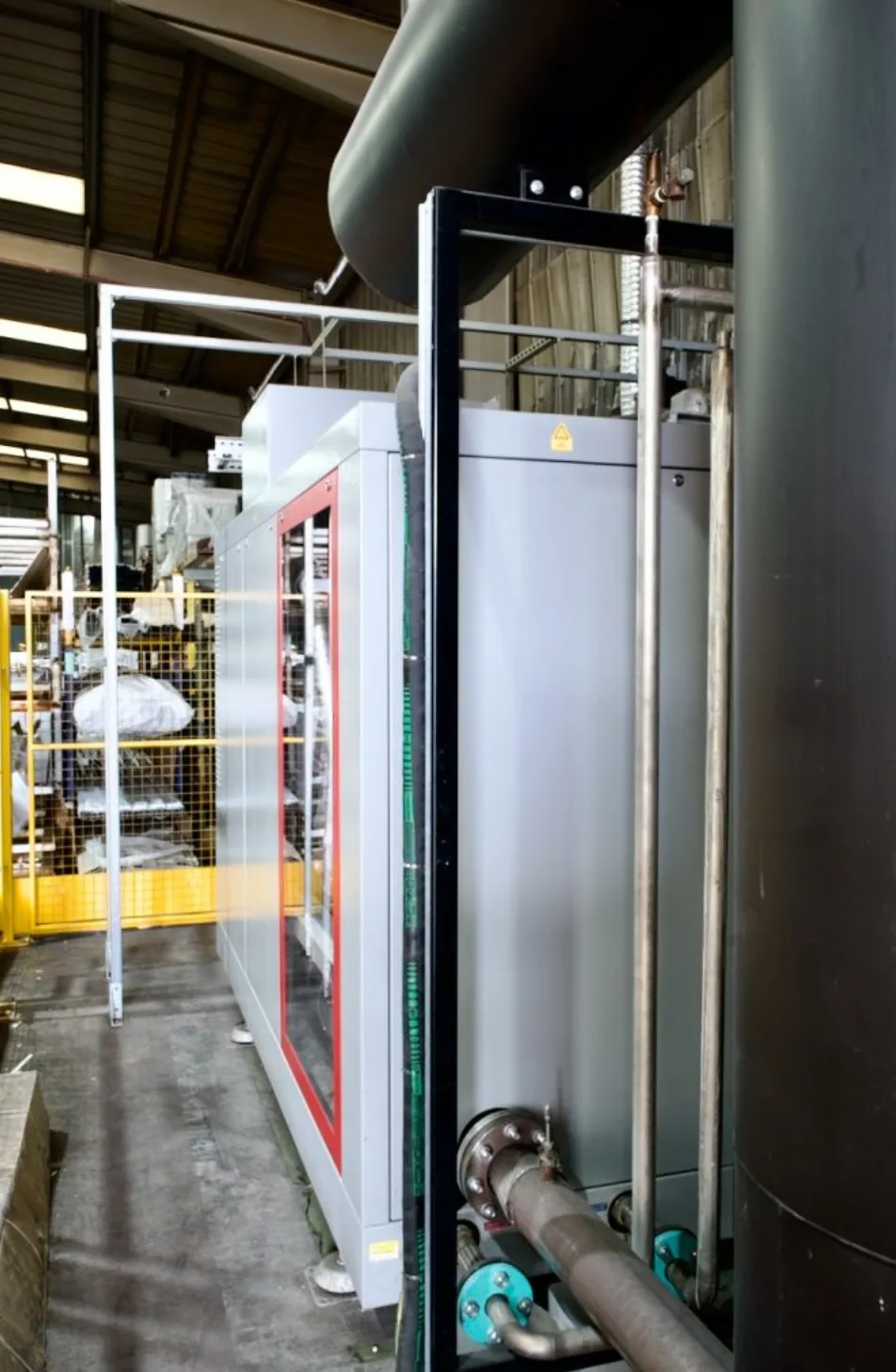
A 140kW unit, compact, near-silent and 91% efficient, sized to the mill's load. It generates the site's electricity while its recovered heat carries the process and building heating that boilers used to provide. The route from survey to switch-on is on how it works.
Annual energy costs are down by around 55%, the system pays for itself inside two years, and the mill's carbon footprint fell with the bill.
The looms kept running throughout. The bills simply stopped being frightening. More machines in the field are in deployments.
A Huddersfield knitwear maker paid back its CHP system within a single year.
InsightWhy a unit of grid electricity costs three times the gas it was made from.
PlatformThe four steps of every deployment, and who pays for what along the way.